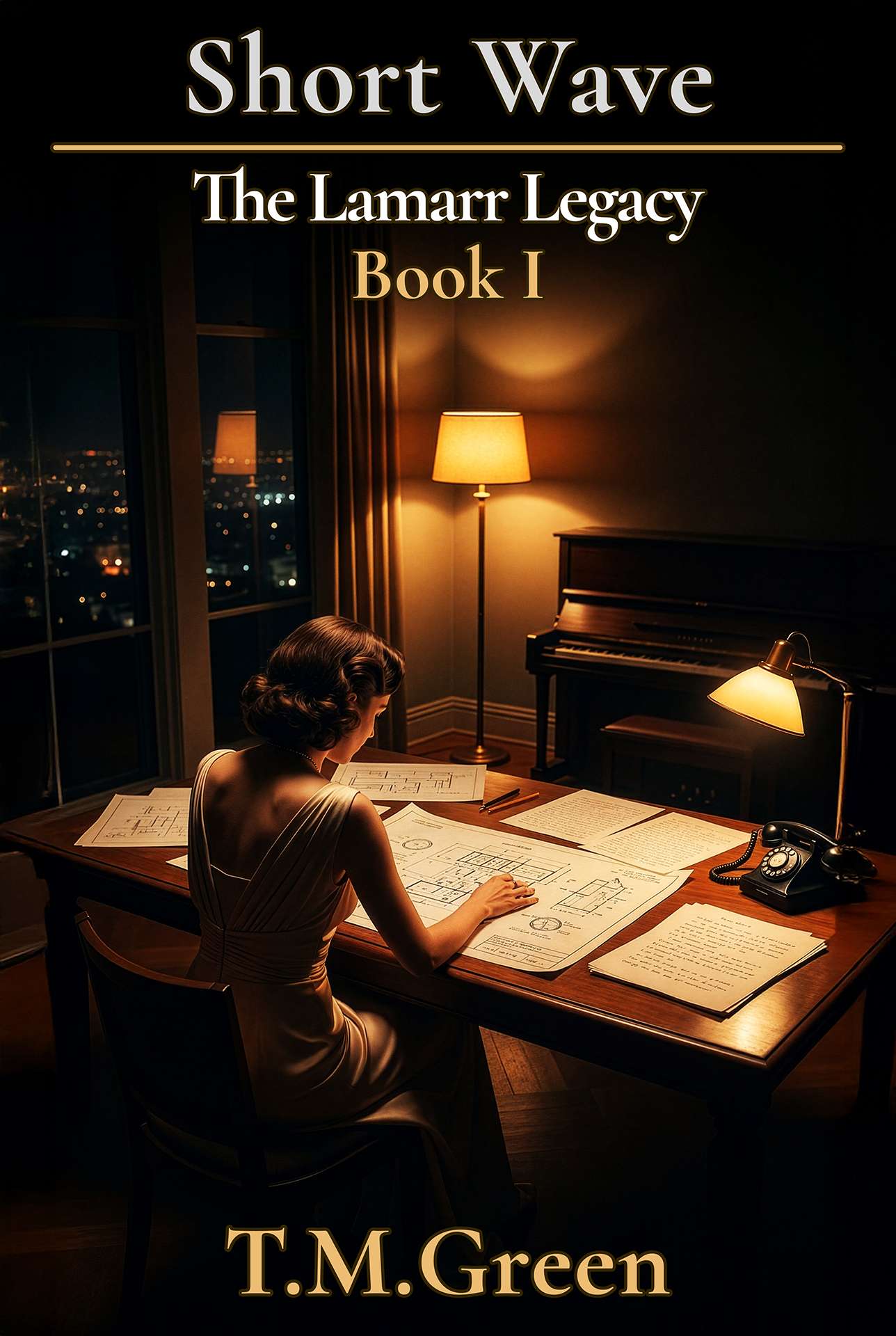
Short Wave
She built something that could not be stopped. They found a way to stop it.
The Story
Hollywood, 1940. George Antheil is an avant-garde composer better known for scandal than success when he meets Hedy Lamarr at a dinner party — and discovers that the most famous actress in the world has been quietly working on a weapons technology problem that has stumped military engineers for years. What begins as an intellectual conversation over dinner becomes a year-long collaboration: eighty-eight frequencies, a signal that hops between them in a sequence no interceptor can predict, a system designed to make radio-guided torpedoes impossible to jam or detect. They file the patent together in the spring of 1941. The date stamp on the carbon copy reads three days before the official filing date.
Then come the men who review it. The men with government connections and careful language who explain, with courtesy and finality, that Hedy Lamarr would better serve the war effort by selling war bonds. The Navy does not implement the patent. The technology is set aside.
George Antheil was in the room. He watched it happen. And what he is left with — what he cannot account for, cannot report, cannot name — is the certainty that the silence that follows is not accidental.
Short Wave is the first novella in The Lamarr Legacy, a five-part conspiracy thriller tracing one suppressed invention across eighty-four years of deliberate silence.
Pigeon Wire
Signup for news, announcements, worldbuilding, and early chapters delivered to your inbox.